 Software-Defined Networking (SDN) has become one of the hottest topics in the IT industry, and for good reason, given the transformative changes that it can bring to many segments across IT, data centre, and carrier markets. SDN offers a myriad of benefits for building, operating, and monetizing networks and services in new ways, including increased agility, flexibility, efficiency, and security, as well as decreased OpEx and CapEx. SDN presents perhaps the first real opportunity to have the network increase a company’s revenue by directly coupling to and enabling business priorities, not just reducing its expenses (or minimizing their increase).
IDC predicts the SDN market will grow from less than $1 billion dollars in 2014, to $3.7 billion by 2016 and $8 billion by 2018. The promises of SDN include simplified network control, more agile networks, increased automation and improved cost efficiency. These might ring a bell if you are familiar with virtualization. SDN is basically extending the transformation that has been going on in the storage and server world to networks.
Is SDN on the horizon for your enterprise?
What is SDN?
SDN architecture allows network engineers to respond quickly to rapidly changing requirements through abstraction of lower-level functions. In other words, SDN decouples the intelligence (control plane) of networking devices such as routers, switches, bridges, gateways, wireless access points and firewalls from the muscle (data plane). The data plane actually stays with the networking hardware, but the control plane which makes the decisions about how packets should flow through the network, is moved to software running on a server. This separation transforms the networking devices to just dumb packet pushers but now the controller has knowledge of the complete network. Because the controller has such accurate information of the whole network, it is possible, for example to dynamically allocate bandwith to an access point e.g. you tube works faster.
With SDN the network administrator can also alter the network traffic from a centralized control console without logging in to the switches or other devices directly one by one. This way he can deliver services to wherever they are needed in the network, without regard to what specific devices a server or other device is connected to.
The key points and advantages of SDN architecture as follows:
Agile: Abstracting control from forwarding lets administrators dynamically adjust network-wide traffic flow to meet changing needs.
 Centrally Managed: Network intelligence is (logically) centralised in software-based SDN controllers that maintain a global view of the network, which appears to applications and policy engines as a single, logical switch with therefore reduces operating costs, provides high-speed internet access and allows for sharing of office equipment.
Programmatically Configured Networking: SDN lets network managers configure, manage, secure, and optimize network resources very quickly via dynamic, automated SDN programs, which they can write themselves because the programs do not depend on proprietary software.
Open Standards-based and Vendor Neutral: When implemented through open standards, SDN simplifies network design and operation because instructions are provided by SDN controllers instead of multiple, vendor-specific devices and protocols.
Computing trends are driving network change
SDN addresses the fact that the static architecture of conventional networks is ill-suited to the dynamic computing and storage needs of today’s data centres, campuses, and carrier environments. The key computing trends driving the need for a new network paradigm include:
Changing traffic patterns: Applications that commonly access geographically distributed databases and servers through public and private clouds require extremely flexible traffic management and access to bandwidth on demand.
The “consumerization of IT”: The Bring Your Own Device (BYOD) trend requires networks that are both flexible and secure.
The rise of cloud services: Users expect on-demand access to applications, infrastructure, and other IT resources.
“Big data” means more bandwidth: Handling today’s mega datasets requires massive parallel processing that is fueling a constant demand for additional capacity and any-to-any connectivity.
In trying to meet the networking requirements posed by evolving computing trends, network designers find themselves constrained by the limitations of current networks:
Complexity that leads to stasis: Adding or moving devices and implementing network-wide policies are complex, time-consuming, and primarily manual endeavors that risk service disruption, discouraging network changes.
Inability to scale: The time-honored approach of link oversubscription to provision scalability is not effective with the dynamic traffic patterns in virtualized networks—a problem that is even more pronounced in service provider networks with large-scale parallel processing algorithms and associated datasets across an entire computing pool.
Vendor dependence: Lengthy vendor equipment product cycles and a lack of standard, open interfaces limit the ability of network operators to tailor the network to their individual environments.
Two top benefits of SDN and how they can be realized in your network.
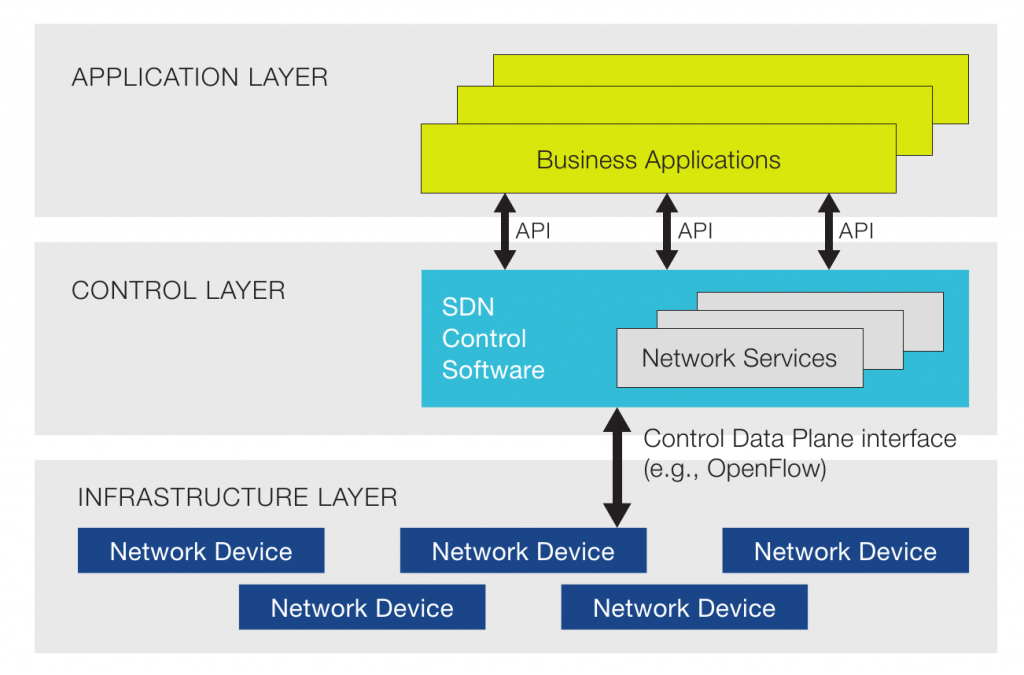
SDN offers a number of benefits to those who implement and deploy it. Out of the many, two are especially noteworthy: reduced operational costs and reduced network complexity. The acceleration of Internet of Things (IoT) and the introduction of 5G will increase the complexity of the network. Addressing these trends will also require additional network management, increasing operational costs. The answer is simple; it’s time to begin migrating to SDN.
SDN centralizes and automates many routine network administration tasks, freeing up network operators’ time while reducing operational costs. Administrators gain the ability to have greater control over their network infrastructure with SDN, leading to better customization and optimization, and further decreasing OpEx as well.
On top of this, SDN abstracts the network (especially important for the diversity of IoT subnets) and introduces programmability to the network. This makes networks viewable as communication fabrics, allowing for easier management and control, and less complexity.
In order to attain the two benefits detailed above, it’s important to understand how to effectively migrate to SDN and to decide which aspects of your network to migrate first, especially in a brownfield environment. To achieve SDN success, and reap the benefits, you must carefully plan ahead. Having a comprehensive “plan of attack” for your SDN migration is key to becoming fully integrated.
As networks become larger and more intricate, using SDN to reduce operational costs and complexity will be ideal and necessary for businesses. SDN can also enable companies to offer new services faster for greater marketplace differentiation.
I-BIT is transforming networks with Software Defined Networking (SDN) by creating an architecture that is dynamic, manageable, cost-effective, and adaptable, making it ideal for the high-bandwidth, dynamic nature of today’s applications.
For free independent advice on your SDN strategy, contact us for further details on how we can help you begin your migration to a software defined network.